
News
Every year on 22nd March, the world celebrates World Water Day, and we examine the realities and complexities surrounding water access. We also promote activities in the use and management of water and make necessary adjustment to deliver universal access to water and sanitation for people and our planet.
First adopted by the United Nations General Assembly in 1993, this year’s World Water Day presents an opportunity to review progress in water accessibility and take actions to accelerate change in solving the water and sanitation crisis.
Water in Africa: Where Are We?
Water is essential to human survival and health, and it is important to sustainable development. With a cross-cutting impact on people and our planet, water is also crucial for unlocking economic growth and productivity and mitigating the impact of climate change.
In Africa, access to water remains a challenge. 1 in 3 Africans experience water scarcity, 779 million lack access to basic sanitation services, and 839 million lack access to basic hygiene services. The continent’s rapid population growth in addition to increased food insecurity, frequent drought, and flooding – a result of climate change – also impacts its ability to sustainably use and manage water.
In 2015, the United Nations adopted the sustainable development goals 6 – ensuring universal access to safe and affordable drinking water, sanitation and hygiene, and ending open defecation. While progress has been made in the provision of access to water and improvement of sanitation services, the WHO/UNICEF estimate that Africa will require a 12-fold increase in current rates of progress on safely managed drinking water, 20-fold increase for safely managed sanitation, and a 42-fold increase for basic hygiene services.
Accelerating Change in Africa’s Water Sector
To accelerate change, strong partnerships across sectors and from all stakeholders is important. Preparation of bankable projects and increased mobilization for investment in water and sanitation services are also critical steps.
The African Development Bank (2018) estimates that $9–$14 billion is needed per year to ensure the security of water resources in Africa. At the African Water Facility, we respond to this challenge by mobilizing and deploying financial and human resources across Africa.
Since 2006, we have supported 133 water and sanitation projects in 52 countries in Africa, through $192.72 million in grant funding. Funding from the Facility has also supported the provision of access to safe water supply for 13.5 million people, sanitation services for 8.4 million people, and $1.66 billion in downstream investment financing.
Nevertheless, there is more to be done. Coordinated efforts and cooperation from local, regional, and global players are required, as well as a multidisciplinary and multisectoral approach to achieving the needed transformation in Africa’s water sector.
We must also give attention to integrated water resources management and consider the nexus between water-energy-food ecosystem and climate change, to address multi-purpose uses and needs for water.
World Water Day and the UN 2023 Water Conference: A Springboard for Action
The 2023 World Water Day coincides with the start of the UN midterm review of the Water Action Decade and leaders of nations, governments and private stakeholders will examine progress in the achievement of universal access to water and sanitation. They will also take actions to accelerate change towards the 2030 mark on universal access to water. The African Water Facility will participate at multiple side events and engage on Africa’s water sector and will host an informal evening with donors on potential solutions.
Achieving full access to water and sanitation calls for national, regional, and global responsibilities. At this conference, bold and timely actions must be taken. There must also be a clear understanding by all stakeholders and decision makers that investing in water has a catalytic effect on our world. To achieve full and meaningful development, we must prioritize water.
Osward Chanda, Director of Water Development and Sanitation, African Development Bank
“Water is life, water food, and our aim is to leave no one behind.”
It’s World Food Day 2023. This year, the focus is on the critical role of water for life and water as the foundation of our food, with the theme – ‘Water is Life, Water is Food. Leave No One Behind’. The goal is to raise awareness about the importance of managing water wisely as rapid population growth, economic development, urbanisation, and climate change is threatening water availability everywhere.
We mark this day at a time of food price inflation and when almost 238 million people face acute food insecurity in 48 food crisis countries. This crisis is not in a vacuum but relates closely to the current water crisis in different parts of the world.
The African Development Bank is supporting the development of multi-use water infrastructure projects in its African member countries by promoting integrated water resources management at all levels. This is to increase the availability and sustainability of water resources as well as the Blue Economy – the conservation of freshwater environments – for food production and improved nutrition.
I’d like to share a few examples of programmes that are yielding exciting results.
The ongoing Thwake Multi-Purpose Water Development Program in Kenya, and the Muvumba Multipurpose Water Resources Development Program in Rwanda are examples of our multi-use water programs which address the pressure on the water-food-energy nexus threatening the achievement of the UN Sustainable Development Goals.
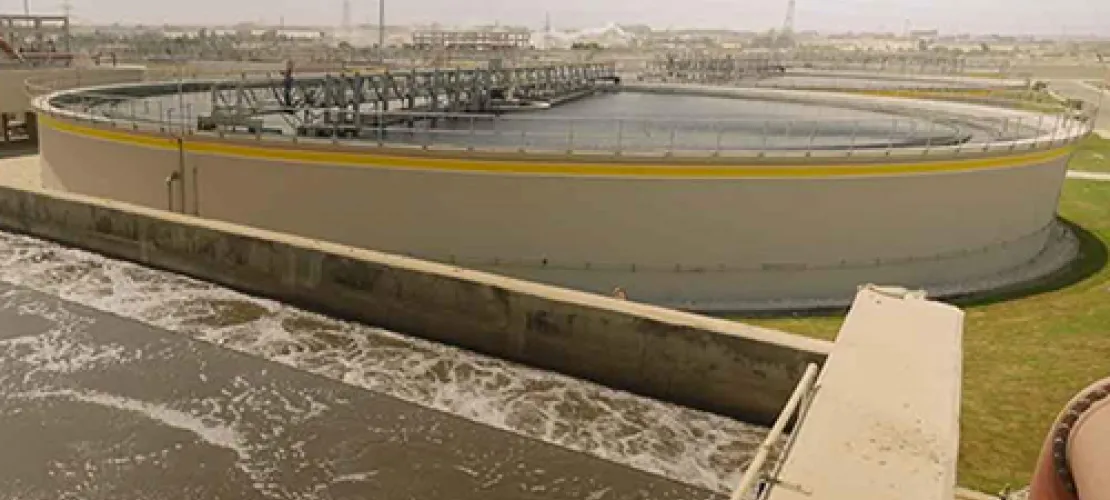
Promoting the generation of fertilizers from wastewater and solid waste and tapping into groundwater resources for irrigation, to significantly increase food security, are also areas of strong focus for the Bank. In Egypt, the Abu Rawash Wastewater Treatment Plant is one example of this. It aims to increase access to well-managed sanitation services, promote the water-food-energy nexus and circular economy approaches through the recycling of treated wastewater, environmental sustainability and ecosystem improvement.
In ensuring food security, water technologies such as wetlands, managed aquifer recharge, rainwater-harvesting and water-conservation techniques in rain-fed agriculture, micro-irrigation, laser land levelling, and solar pumping systems are all being explored.
Reliable, low-cost, clean energy and water recycling are approaches that can improve agricultural yields and optimise farming systems. Also, scaling up the digitalisation of weather forecasting, water information reporting, and other agro-meteorological data networks are crucial. These technologies provide the foundation for efficient use of existing water resources and make more water available for food production.
Agricultural water management can play a significant role in reducing vulnerability and strengthening resilience for vulnerable populations and will be an essential element in realising the goals of the Food and Agriculture Delivery Compacts, which African countries and regions have adopted. The water sector contributes to these by raising awareness about the value of adapting climate smart water technologies to improve efficiency and reduce the cost of delivering water for agriculture.
Under our High 5s ‘Feed Africa’ priority, the Bank is committed to agricultural transformation which supports UN Sustainable Development Goal 2 – Zero Hunger. It also continues to mobilise cross-sector resources and financing to deliver on Africa’s food and agriculture potential. Harnessing water resources for food security requires improved governance, significant investment, and the deployment of smart water management practices to expand Africa’s food production potential.

Osward Mulenga Chanda
Director, Water Development and Sanitation Department at the African Development Bank.